
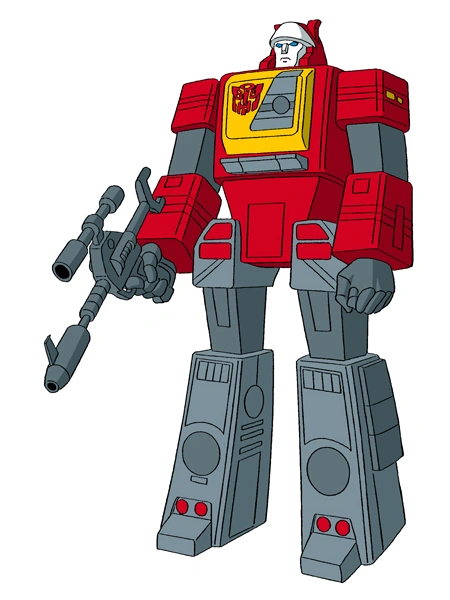
Blaster is the Autobots’ communications specialist and resident music enthusiast in the Transformers Generation 1 (G1) universe. First appearing in Transformers G1 Season 2, Episode 21: “Oh, Brother!”, Blaster quickly became known for his energetic personality, booming voice, and love of loud Earth music. As the Autobot counterpart to Soundwave, Blaster plays a crucial role in intelligence gathering, communication disruption, and morale boosting.
Origin and Role in the G1 Storyline
Originating from Cybertron as an Autobot communications officer, Blaster’s primary function is handling long-range transmissions, decoding enemy signals, and countering Decepticon communications interference. His sensory equipment and audio-analysis systems make him one of the most valuable non-combat specialists on the team—though he’s more than capable of fighting when the moment calls for it.
On Earth, Blaster’s fascination with human culture—especially music—shapes his personality. He often uses sonic attacks or audio-based distractions to turn the tide in battle. Blaster’s rivalry with Soundwave is one of the most iconic Autobot–Decepticon pairings, with both commanding cassette-based minions and specializing in communications warfare.
Blaster later becomes a central figure within Autobot City, coordinating defenses and leading radio operations.
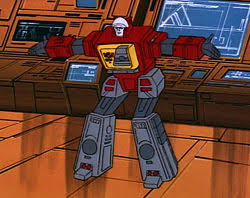
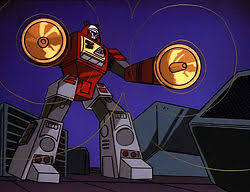
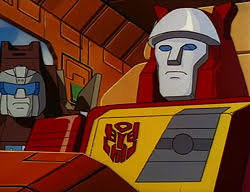
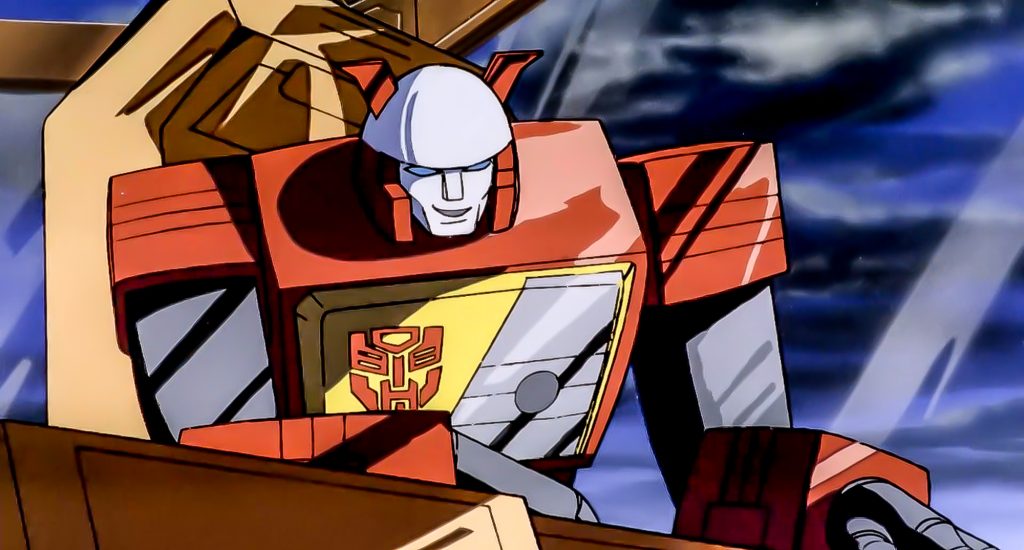
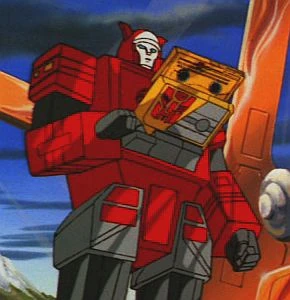
“When music is rockin’, I’m rollin’!” – Blaster
Key Traits and Personality
Blaster’s most defining traits include:
- Energetic enthusiasm – He brings life and humor to serious situations.
- Love of Earth music – His fascination with radio culture shapes his speech and style.
- Loyal communications expertise – Blaster can jam signals, broadcast tactical alerts, and intercept enemy transmissions.
- Courage and leadership – Especially highlighted in later episodes and in Transformers: The Movie.
- Strong rivalry with Soundwave – Their battles emphasize the clash between Autobot freedom and Decepticon order.
Blaster’s upbeat style and heartfelt dedication make him one of the most charismatic Autobots in G1.
TV Episode Appearances
Notable G1 Appearances:
Key Blaster episodes include:
- Season 2, Episode 21 – “Oh, Brother!”
First appearance; aids in communications and demonstrates expertise with audio equipment. - Season 2, Episode 39 – “Blaster Blues”
Central spotlight episode where Blaster’s love of radio causes conflict with Autobot command—until his skills save the day. - Season 2, Episode 44 – “The Gambler”
Uses his audio systems to help the Autobots escape alien captivity. - Season 2, Episode 48 – “Auto-Bop”
Teams with Tracks to stop Soundwave’s mind-control scheme using manipulated radio frequencies. - Season 3, Episode 5 – “Five Faces of Darkness, Part 5”
Provides battlefield communications and intelligence support. - Season 3, Episode 27 – “The Quintesson Journal”
Plays a role in decoding transmissions related to the Quintessons’ manipulations.
Blaster has numerous appearances throughout Seasons 2 and 3, often taking center stage in episodes involving communication, radio waves, or Soundwave.
Appearance in Transformers: The Movie (1986)
Blaster plays a critical role during the assault on Autobot City. Stationed in the communications tower, he alerts Ultra Magnus to the incoming Decepticon attack and attempts to broadcast messages through Decepticon jamming interference. He deploys several of his cassette partners—Rewind, Eject, Ramhorn, and Steeljaw—to reinforce city defenses.
His clash with Soundwave is one of the film’s standout rival moments, emphasizing their long-running adversarial relationship.
Associated Toylines
G1 Original Release (1985)
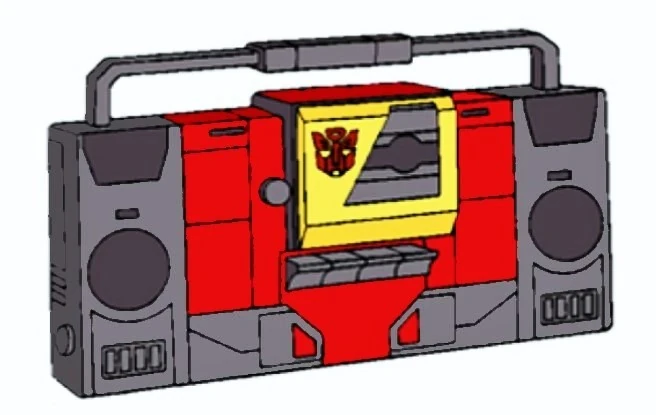
Blaster was introduced in 1985 as part of the second wave of the original G1 toyline.
- Transforms into a large red cassette radio (boombox).
- Features chest compartment that opens to store Autobot Mini-Cassettes (such as Eject, Rewind, Ramhorn, and Steeljaw).
- Includes spring-loaded eject mechanism for cassette deployment.
- One of the largest and most interactive Autobot figures of the era.
Blaster’s size and cassette gimmick made him a direct Autobot counterpart to Soundwave, increasing his appeal among collectors.
G1 Reissues / Encore (Takara)
Takara reissued Blaster in the Encore line, maintaining:
- Original mold and transformation engineering
- Classic red-and-gray deco
- Compatible cassette functionality
These releases preserved vintage authenticity while offering improved materials in some editions.
Commemorative Series (Hasbro)
Hasbro released Blaster in G1-style commemorative packaging:
- Faithful recreation of the original 1985 figure
- Retro box art and inserts
- Collector-focused presentation
Generations / Titans Return (2017)
Part of the Titans Return line:
- Head transforms into a smaller Autobot partner (Titan Master gimmick).
- Updated articulation and modern proportions.
- Retains boombox alt mode while modernizing sculpt details.
This version blends G1 aesthetics with contemporary play features.
Legacy Evolution (2023)
Released in the War for Cybertron/Legacy continuity:
- Strong G1 cartoon-inspired proportions.
- Compatible with modern Core Class cassette figures.
- Improved articulation and cleaner transformation engineering.
This version is considered one of the most animation-accurate retail Blasters to date.
Studio Series 86
Inspired by The Transformers: The Movie:
- Screen-accurate sculpt reflecting his brief appearance in the film.
- Refined paint applications and articulation.
- Designed to scale properly with other Studio Series 86 figures.
Masterpiece Line
Takara’s Masterpiece Blaster offers:
- Highly detailed, cartoon-accurate sculpt.
- Premium articulation and improved proportions.
- Compatible Masterpiece-scale cassette partners.
- Collector-focused packaging and accessories.
This version represents the definitive high-end G1 Blaster for many collectors.
Third-Party Interpretations
Numerous third-party companies have produced premium Blaster-inspired figures featuring:
- Complex engineering
- Die-cast components
- Cartoon-accurate detailing
- Fully articulated cassette partners
These versions often emphasize animation accuracy and display presence.
Legacy and Impact
Blaster’s legacy lies in his unique blend of charisma, music-driven personality, and communications expertise. He represents the Autobot spirit of freedom—not just in battle, but in culture and expression. His rivalry with Soundwave has become one of Transformers’ most iconic hero–villain dynamics.
Blaster’s design, personality, and cassette companions continue to influence later media, including comics, toy reinterpretations, and fan-favorite reimaginings. His blend of fun and heroism makes him a standout member of the G1 cast.
Across decades of Transformers history, Blaster remains the Autobots’ voice—loud, proud, and unforgettable.r circles proves his lasting cultural impact

